Tuesday, March 8, 2016

VACCINE CONTROVERSY

Bring up the topic of vaccinations for pets and you're sure to set off a war between those "for" and those "against". Both sides can defend their arguments eloquently, but we need to look at some basic facts when deciding the best course of action. Based on the facts, you can see the vaccine debate has been raging for over a century.

"For":
- In 1855 the first legislation was passed mandating vaccination of school age children.
- Vaccinations have saved the lives of millions of pets and humans by preventing illness.
- Vaccinations have helped eradicate or minimize outbreaks of serious diseases, like distemper and smallpox, that have killed thousands of pets and humans in the past.
- Vaccinations protect people from deadly diseases like Rabies, which are spread through infected animals.
- According to manufacturers, vaccines are safe, with very low incidence of adverse event reactions reported.
- Many veterinarians and pediatricians will not treat patients that are not vaccinated.
- Many boarding, grooming, day care, and hospital facilities will not admit unvaccinated animals.

"Against":
- In 1879 the Anti-Vaccination Society of America was formed
- In 1986 the National Childhood Vaccine Injury Act was passed in response to the large number of lawsuits filed claiming brain damage, illness, and death in children. The Act was intended to protect doctors, nurses, and vaccine manufacturers from liability.
- Vaccines are not safe; it is estimated only 1% of adverse event reactions are actually reported. Therefore, the volume of adverse events is actually quite high, and may be as high as 10%.
- Vaccine reactions occur ten times more often in small breed dogs than in larger breeds.
- Risk of an adverse reaction increases when more than one vaccine is given at one time.
- Vaccines provide immunity for many years and do not need to be given annually. Some may provide protection for life.
- Vaccines should only be given to healthy individuals. All vaccine labels and package inserts state that vaccines are for use in healthy pets only. Unfortunately, no one defines "healthy". Doctors and veterinarians do not consider allergies, poor condition, past illness, tumors, or cancer to be considered "poor health", opting to vaccinate in the face of disease.

No matter which side of the fence you are on, you will be able to find supporters. As an integrated veterinarian, I fall somewhere in the middle, but definitely more toward the "against". In my opinion, vaccinations are given too often, too many at one time, to animals with minimal exposure to the disease being "prevented", and to sick animals. In future blogs I will discuss my recommendations, but remember, each pet is an INDIVIDUAL, meaning vaccine recommendations must be INDIVIDUALIZED. There is no "one sizes fits all" prescription.


Sunday, March 6, 2016

NATURAL FLEA AND TICK PREVENTION


Now that we've decided our world is polluted from all the chemicals we are using, we need to come up with some more natural alternatives to keep our pets free from fleas, ticks, and other pests. I will put my thoughts on heartworm prevention in a different blog, but today I will offer some alternatives for external parasites. I rarely need to use anything on my dogs and cats. Even though we live in a humid environment in the summer and fall, my animals remain pest-free. I think they have healthy immune systems thanks to feeding a species-appropriate diet, using probiotics, and minimizing vaccinations and drugs. I have to believe that helps keep parasites away, but that's my personal opinion.

Essential oils have worked well in my hands in the past. Be careful when applying essential oils and don't overdo them. Remember that your pet's sense of smell is much stronger than yours. Apply oils in a well ventilated area and never spray around the pet's face. Cedar oil has worked well for many of my clients. It is available for use on pets or in the environment. Not everyone likes the smell of cedar and there are many other essential oil products available. Personally, I use Vetrirepel because I like the smell. Hue and I recently took the Vetrirepel with us on our trip to the islands to repel mosquitoes. It worked great! Lavender oil has been shown to repel ticks, while lemongrass oil seems to work particularly well against fleas. Peppermint oil will affect the nervous system of fleas and ticks without harming your pet. Many people use rose geranium oil and find it works well. Neem oil has been around forever and is another favorite. The spray I use for my horses (Ricochet) contains neem and I love the smell. Rose geranium oil is safe to use full strength directly on the pet, but you will only need to apply one drop behind each shoulder blade and one drop near the base of the tail. Other oils should be diluted before applying to pets. Oils can be diluted in EVOO or water and rubbed throughout the coat. They can also be diluted by putting a few drops in your favorite pet shampoo or conditioner. A bandanna with a few drops of diluted essential oil can also be used as a natural flea collar. Make sure the smell is not overwhelming, as this will be close to your dog's nose.

Coconut oil kills and repels fleas due to the ingredient lauric acid. Coconut oil can be rubbed through the coat and can be fed to the pets. I use 1 teaspoon per 20 pounds of body weight twice daily in the food. Coconut oil melts at 76 degrees, so rubbing it between your hands will make it into a liquid that you can rub through your pet's coat. It moisturizes skin and helps kill yeast too.

Another great product is Bug Off Garlic for dogs (not cats). I have used this in the past in my barn for the horses. We still had flies, but the horses eating the product were bothered a lot less than the horses that weren't. A lot of people claim dogs will die when fed garlic, but that simply isn't true and this is a great product. Fresh crushed garlic can also be added to your dog's diet for flea protection. Anywhere from 1/2 clove to 2 cloves daily would be considered safe, depending on size of the dog. A good rule of thumb would be no more than 1/2 clove per 20 pounds of body weight daily, with a maximum of 2 cloves for any size dog. However, if you have a pet that has a history of hemolytic anemia, it would be safer to avoid use of garlic in any form.

I do not recommend using Brewer's Yeast tablets for flea prevention. Brewer's yeast basically contains B vitamins, but they are processed and degraded. B vitamins supplied naturally through a healthy diet will be more effective.

Beneficial nematodes can be used to kill flea larvae in your yard. Remember, the squirrels, rabbits, mice, and other small critters outside can be harbingers of fleas. Nematodes will not survive in hot, sunny areas of the lawn, but the fleas and ticks do not like those areas either. So spread these little guys in the shady, moist areas where the fleas and ticks are most likely to be found.

Ticks like cool, shady places, so a short-cut lawn with lots of sun will deter tick infestation. Plant deer resistant plants in your yard so deer will not be as tempted to enter (I found out the hard way they LOVE tulips!). Plant lavender, sage, mint, wormwood, rosemary, and marigolds, which the fleas and ticks do not like.

If you are in a suitable area, a few chickens (you can collect your own organic eggs!) or guinea hens will go a long way toward keeping tick populations down to a minimum.

Food grade Diatomaceous Earth can be sprinkled in the environment or on the pet. Be careful when using topically, as you don't want your pet to inhale the dust. DE will be drying to the coat, which is why it works to kill fleas and ticks - it dries them out.

Many people claim vinegar works well. It can be added to the drinking water at the rate of 1 teaspoon per quart of water. We used to make a mixture of white vinegar and Skin So Soft to use on our horses. They had shiny coats and smelled great! Vinegar can also be diluted in water in a 1:1 mixture and sprayed on the coat.

Don't forget the old fashioned flea comb. The teeth are very close together and will comb out fleas and flea eggs. Put the fleas in a bowl of dish soap as you remove them, as this will kill them. These are particularly good for cats because it's a lot harder to bathe a cat. Comb your pets daily if you have any evidence of flea activity.

Vacuum. A lot. Vacuuming will help remove the fleas, eggs, and larvae in the environment. Be sure to get in the corners, under the furniture, and in the crevices under the sofa cushions if your pet sleeps on the furniture. Wash pet bedding often in hot water.

No matter which prevention method you choose, remember that pets can still succumb to diseases spread by these parasites, even with the use of chemical preventatives. I have had many patients become ill, even though they had monthly chemicals applied, either topically or orally. There are NO guarantees your pet will remain free of pest-born diseases, no matter what you use. Keeping your pet free from Lyme disease, Anaplamosis, Ehrlichiosis, tapeworms, or other diseases does not mean you need to resort to chemical prevention. Vigilance and common sense, along with the use of natural preventatives, will keep your pets healthier in the long run. By avoiding the use of chemicals, our environment and the health of the planet for future generations will be greatly improved.

Saturday, March 5, 2016

A WORLD AFRAID OF BUGS

Let's face it, the human race is afraid of bugs. My son and half my staff run screaming from the room when they see a spider. Stink bugs are everywhere in New Jersey in the spring, dive bombing us when we least expect it. For whatever reason, things that fly, hop, and bite give us the creepy crawlies. We don't want to be assaulted by fleas, ticks, mosquitoes, wasps, and gnats and we don't want our pets to be subjected to these pests either. In our planned assault against these creatures, we have resorted to living in a chemical world, constantly bombarding ourselves and our pets with toxins that could just as easily kill us, instead of the bugs we are trying to eliminate.

Not only do we risk toxicity by direct application of the chemicals; we are also exposed through the environment. All drugs that enter the body, whether through oral ingestion or topical application, enter the bloodstream, filter through the body, and are excreted through the stool or urine. These waste products then enter the soil and waterways. Crops take up the chemicals from the soil and water through their root system and we end up ingesting the chemicals and their potentially harmful metabolites through the foods we eat. Animals grazing on the tainted plants are also exposed. Many of these pesticide chemicals are neurotoxins for the insects and arachnids (fleas and ticks) they are meant to kill, but that means they will have the same effect on beneficial insects in our world. If we kill the bees we don't have pollination. Not a pretty picture. Earthworms are also extremely sensitive to these pesticide chemicals. Not only are we killing many beneficial life species, but we are also creating super-species of drug resistant bacteria and pests.

Little work has been done to determine the uptake of these chemicals into organisms and through the food chain. No long term studies have been performed. New drugs like alfoxalaner and fluralaner (Nexgard and Bravecto) had no long term environmental studies performed, yet their toxic potential is monumental. Drug companies keep making bigger, better, stronger chemicals to keep the bugs at bay, but at what cost to the health of our bodies and our world?

I know I promised to give you more natural alternatives and that is coming. Stay tuned.

Thursday, March 3, 2016

FLEAS, TICKS, AND DRUGS OH MY!


No doubt about it, fleas drive us and our pets crazy. While considered a nuisance for some, they are capable of spreading serious diseases like Typhus, Bubonic Plague, and tapeworms. They thrive in warm, humid environments that provide the ideal scenario for reproduction. Female fleas have a lifespan of 30-90 days and are capable of discharging 40 to 50 eggs per day, potentially resulting in hatching of thousands of eggs. The adult fleas we see are only the tip of the iceberg, as 95% of the flea population is present as eggs, larvae, and pupae. So if you are seeing a lot of adult fleas on your pet, you have a serious infestation. Larval and pupal stages can survive cold temperatures, waiting until spring to hatch.

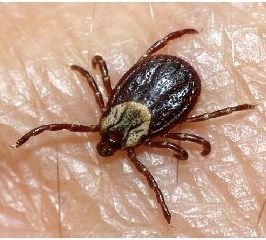
Ticks have been present on earth for millions of years. They are harder to kill and survive temperature extremes, with a lifespan of months to years. One female can lay thousands of eggs, which hatch when temperatures and humidity rise. Ticks can transfer viruses, bacteria, and protozoa to their hosts, resulting in serious illness. These include Lyme disease, Rocky Mountain Spotted Fever, Ehrlichiosis, Anaplasmosis, tularemia, and tick paralysis. Once attached, ticks are harder to remove from the host. Ticks have been responsible for economic losses from infestation of cattle herds, but interestingly, not all animals in the herd will be affected equally. Usually the weaker animals will have high infestation while the stronger animals will be minimally infested.

Over the years, strong chemicals have been developed to deal with these parasites. Development of new chemical products has been driven by fear and greed. Drug companies feed on our fear of disease and their need for higher profits. Unfortunately, our pets often pay the price with their lives when new chemicals are developed that cause seizures, liver and kidney failure, and skin reactions. Problems with chemical treatment of livestock include toxicity to handlers and animals, environmental contamination of land and water supplies, residues contaminating meat and milk, and development of resistance to the chemicals by the fleas and ticks.

Vaccinations have been developed to protect pets and livestock against the diseases spread by these vectors, most notably Lyme Disease for pets and multiple vaccines for livestock. Unfortunately, many pets with minimal exposure to ticks are vaccinated every year for Lyme disease. Again, fear and greed drive the push for vaccination when it is not warranted.

If you want to avoid the use of chemicals in your pets, how do you deal with these potentially disease-causing pests? Stay tuned for part two.


Wednesday, February 24, 2016

NO GMO FOR ME PLEASE

Not everyone despises GMO foods, but I certainly am not of fan. From the two articles re-posted below, you can see that the big food companies and big pet food representatives want to keep us in the dark. They feel that GMO foods are "perfectly safe" and we should not be able to make our own decisions about what we are eating or feeding to our pets. Just awful.

From www.justlabelit.org :

The DARK Act

In 2014, Vermont became the first state to require mandatory GMO labeling.  Connecticut and Maine have also passed GMO labeling laws that will go into effect once neighboring states pass similar laws and other states are currently looking to pass GMO labeling legislation.
In response to these state efforts, Representatives Mike Pompeo (R-Kan.) and G. K. Butterfield (D-N.C.) introduced federal legislation developed by food companies that we in the consumer rights community have dubbed the “Deny Americans the Right-to-Know” Act (DARK Act). This anti-GMO labeling bill passed the House of Representatives in 2015 and similar legislation has just been introduced by Senator Roberts and could pass the Senate any day.
The Senate version of the “Deny Americans the Right to Know” (DARK) Act would:
  • Preempt states from requiring labeling of GMO foods.
  • Strip the Food and Drug Administration of its jurisdiction over GMO food disclosures.
  • Make it harder for companies like Campbell’s Soup to voluntarily disclose the presence of GMOs.
  • Make it the responsibility of USDA to promote biotechnology to consumers.
  • Continue the current, broken voluntary labeling system.
Americans want the Right to Know:
Dispelling GMO Labeling Myths:
  • GMO labeling will not increase food prices. Companies frequently change labels to highlight new innovations or to make new claims.
  • Voluntary labeling will not work. Companies have been allowed to make voluntary non-GMO disclosures since 2001, but consumers are more confused than ever.
  • There is no “patchwork quilt.” Current state GMO labeling laws are virtually identical, so there will be no “patchwork quilt” of different state laws. The responsible solution to concerns over a possible future patchwork would be the establishment of a uniform, national mandatory labeling standard.
  • GMO crops do not feed the world. Conventional and GMO corn and soybean yields have increased at the same rate. What’s more, S. farmersproduce only 4 percent of rice, wheat, fruits, and vegetables, and most U.S. corn and soybeans are used for animal feed and ethanol, not food.
  • GMO crops have increased herbicide applications. Widespread adoption of GMO crops has increased annual applications of glyphosate – a probable human carcinogen – from 16 million pounds to more than 280 million pounds.
  • GMO crops have led to more toxic herbicides. As weeds have become resistant to glyphosate, farmers have turned to more toxic weed killers linked to cancerParkinson’s disease, and reproductive problems.
Take action now! Americans need to tell their members of Congress to stop the DARK Act from becoming law and demand support for mandatory GMO labeling.

From PET FOOD NEWS
ON FEBRUARY 22, 2016

AFIA urges Senate action on food labeling bill

Proposal would recognize the safety of ingredients produced by modern agriculture biotechnology

 My interpretation: Basically, they are saying they recognize "the safety of GMO ingredients" and feel we should just accept them in our diets and the diets of our pets. I saw the AFIA reps in action at the AAFCO meeting. Not good.
The American Feed Industry Association (AFIA) thanks Senate Agriculture Chairman Pat Roberts (R-Kan.) after the introduction of a proposal supporting a federal food labeling solution that recognizes the safety of ingredients produced by modern agriculture biotechnology. AFIA now urges action from the Senate, requesting the bill be taken up and passed in an expedited manner.
“The Vermont law requiring foods containing genetically modified ingredients to display on-package labels goes into effect on July 1. Although animal food is exempt from Vermont’s law, our industry supports a uniform, national labeling standard for products containing genetically modified ingredients,” said Leah Wilkinson, AFIA vice president of legislative, regulatory and state affairs. “If Congress implements a national law requiring a uniformed standard like what is contained in this bill, the food industry, animal food industry, farmers and consumers will share equal protection from unnecessary costs and different state mandated labeling requirements.”
Studies show the labeling of GM products will cost American families up to $500 more in groceries annually, with low-income families bearing the brunt of the changes.
“AFIA and the animal food industry welcome this bill with open arms as we seek a solution to this ongoing dilemma. We believe this is a fair resolution for both agriculture and consumers, as it provides consistency in the marketplace. We thank Chairman Roberts for his leadership to find a well-rounded and uniformed approach to national food labeling. Congress, we urge you to act on this opportunity quickly,” Wilkinson stated.

Monday, February 22, 2016

THE IMPORTANCE OF NOTHING


As many of you are aware, I have spent the last three weeks touring the Caribbean, with stays on Bequia, St. Lucia, and St. Kitts, as well as passing through Barbados, Antiqua, Nevis, and St. Vincent. My original purpose was to spend three weeks working on my next book about caring for your pets using natural therapies. However, once my feet hit the sandy beaches and my body started to detox from living life in hyper-speed, I realized how important it is to take time for myself. Anyone who knows me, knows that I work 7 days a week, 18 or more hours per day, and suffer from insomnia. My brain never stops. I worry, I ponder, I plan. It took five days before I could actually just SIT and watch the ocean.

One thing I have discovered on this trip is how important it is to do NOTHING once in a while. Chinese Medicine teaches the importance of BALANCE in our lives and I realize my life has been very out of balance. I've had to eat an incredibly restricted diet at home to counteract the emotional stress I deal with by working so much. Here in the islands, I have been able to eat and drink anything I want, with no side effects. That, alone, is enough proof that I need to find balance.

I am not ready to retire, but I do think I need to slow down...A LOT. Figuring out how to do that will be difficult, as I have so many irons in the fire and so many that depend on me (including my family, 9 spaniels, 4 cats, 6 horses, and a bunch of employees and patients). I love all the people that depend on me and I love serving them. But, I now realize that sometimes I need to be just a little bit selfish.

We used to own a home at the shore and once we hit the bridge to the island on Friday afternoon, I was able to sit on the beach and read trashy novels for 2 days without thinking so much about work. I don't want to own another home at the beach (kind of a nightmare really), but our little slice of heaven with spaniels in New Jersey can be that oasis. As long as I can remember the importance of nothing. And that sometimes, nothing is everything.

Saturday, February 20, 2016

TODAY IS NATIONAL LOVE YOUR PET DAY


As if we don't shower our pets with love every day, apparently we have been given a day to celebrate them. So, on this national day of loving, I have provided -

Ten Ways to Love Your Pet:
1. Spend a little extra time just sitting, petting, and talking to your pet today.
2. Get the leash and go for a walk with no agenda. Let them sniff everything they want.
3. Play with them with their favorite toy (we have one Cavalier King Charles Spaniel that loves to play with her floppy frisbee and begs EVERY day for this).
4. Give them a special meal - we make a lot of home cooked stews for our dogs (my specialty is food therapy - using food for healing instead of using medicine).
5. Make some home made treats - there are a lot of online recipes for healthy treats.
6. Take them for a ride in the car, even if you don't go anywhere other than around the block.
7. Schedule a play date with other dogs if they are sociable.
8. Schedule a massage for your pet (or give your pet a massage).
9. Help your dog create his "bucket list" and do something on the list.
10. Actually listen to your dog. Learn to understand what he or she wants.


Healthy home made treat:
Grated coconut (I like the Cocotherapy coconut chips)
Add hot water to rehydrate; can simmer on stove for a few minutes to thicken.
Add two egg yolks and a sprinkle of cinnamon. Stir.
Beat the whites of two eggs until fluffy.
Fold into mixture of coconut and egg yolks and cinnamon.
Bake in mini muffin pan at 325 until firm.
Cool and eat. Feel free to share with your pets!